The Ultimate Indoor Plant Care Guide
Bringing greenery into your home or office is one of the easiest ways to boost well-being and enhance aesthetics. While each plant has its unique personality and needs, many popular indoor varieties are surprisingly forgiving. This guide will walk you through the essential care requirements for some of the most beloved and beneficial houseplants.
1. Jade Plant (Crassula ovata)
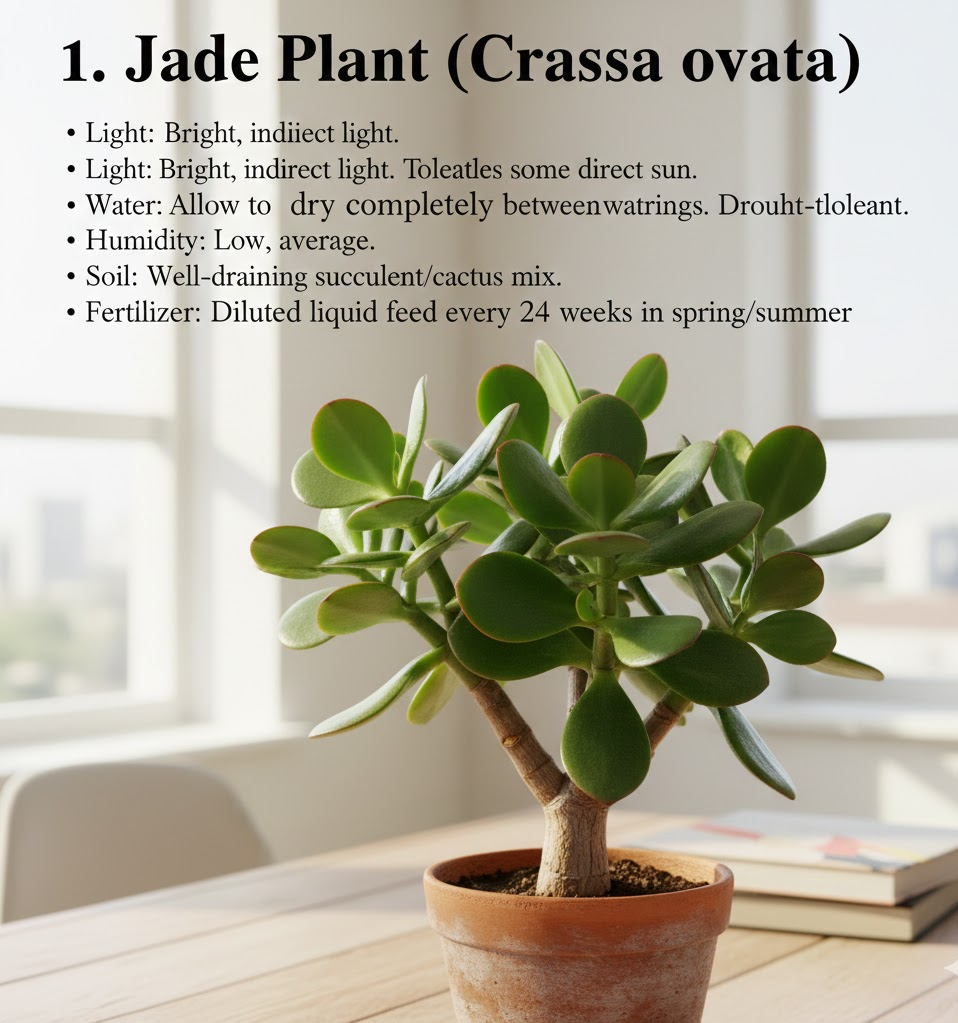
About: A popular succulent known for its thick, shiny, oval leaves and tree-like appearance. Often considered a symbol of good luck and prosperity.
- Light:Bright, indirect light. Tolerates some direct sun, especially morning sun, which can encourage reddish leaf edges.
- Water:Allow the soil to dry out completely between waterings. Drought-tolerant. Overwatering is the most common cause of problems.
- Humidity:Low to average.
2. Money Plant (Epipremnum aureum - Pothos)

About: A fast-growing vine with heart-shaped leaves, often variegated. Extremely easy to care for, popular for its lush foliage.
- Light:Low to bright, indirect light. Tolerates low light but variegation may fade. Avoid direct sun.
- Water:Allow the top inch or two of soil to dry out between waterings. Drought-tolerant.
- Humidity:Average to high. Appreciates occasional misting.
- Soil:Well-draining potting mix.
- Fertilizer:Balanced liquid feed every 4-6 weeks during the growing season.
3. Aglaonema (Chinese Evergreen)

About: A striking tropical plant with rich, variegated foliage, available in many colorful varieties (reds, pinks, silvers). Excellent for low-light conditions.
- Light:Low to medium, indirect light. Avoid direct sun, which can scorch leaves.
- Water:Keep soil evenly moist, but not soggy. Allow the top inch to dry out between waterings.
- Humidity: Appreciates regular misting or a humidifier.
- Soil:Well-draining potting mix.
- Fertilizer:Balanced liquid feed every 6-8 weeks during spring/summer.
4. Snake Plant (Sansevieria trifasciata)
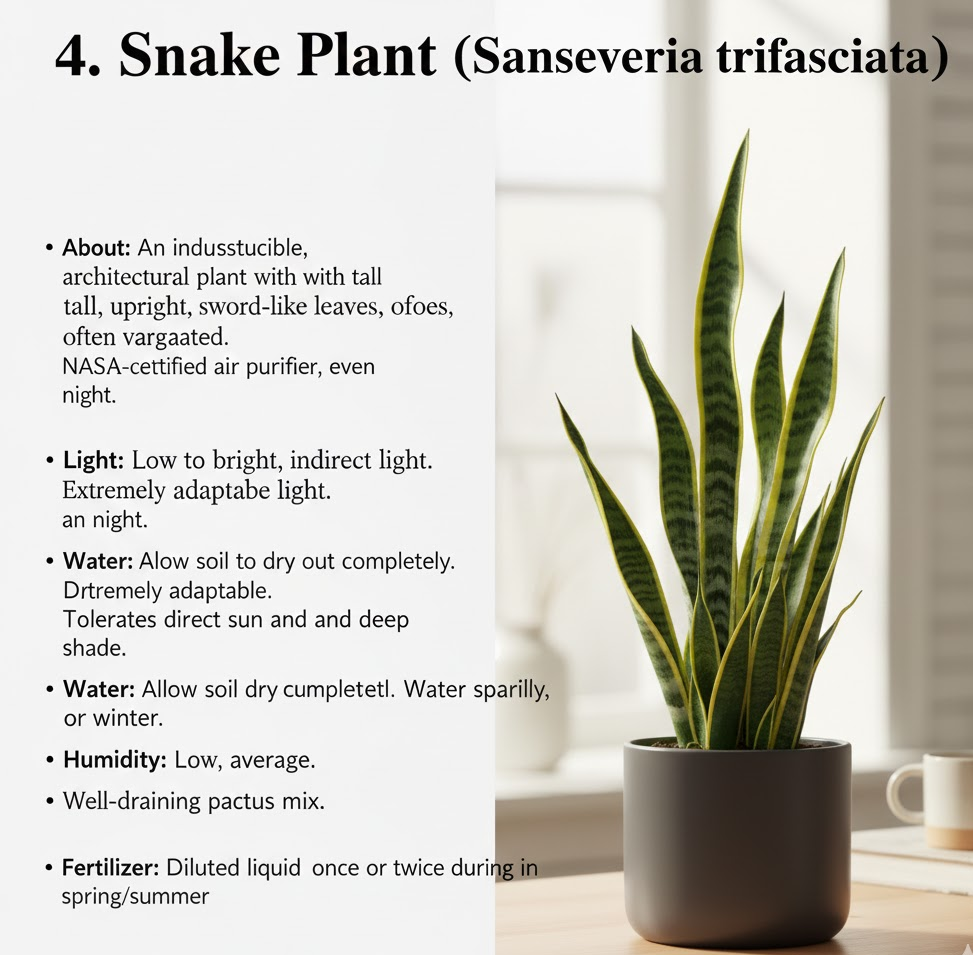
About: An indestructible, architectural plant with tall, upright, sword-like leaves, often variegated. A NASA-certified air purifier, even at night.
- Light:Low to bright, indirect light. Extremely adaptable to various light conditions, from deep shade to direct sun (though too much direct sun can scorch).
- Water:Allow soil to dry out completely between waterings. Water sparingly, especially in winter. Overwatering leads to root rot.
- Humidity:Low to average.
- Soil:Well-draining cactus mix or standard potting mix with perlite/sand for drainage.
- Fertilizer:Diluted liquid feed once or twice during spring/summer.
5. ZZ Plant (Zamioculcas zamiifolia)

About: An incredibly tough, drought-tolerant plant with thick, waxy, dark-green foliage that grows from bulbous rhizomes. Excellent for neglectful owners.
- Light:Low to bright, indirect light. Tolerates very low light conditions, making it perfect for dimly lit spaces.
- Water:Allow soil to dry out completely between waterings. Err on the side of underwatering, as it’s susceptible to root rot.
- Humidity:Low to average.
- Soil:Well-draining potting mix.
- Fertilizer:Feed once or twice a year in spring/summer with a balanced liquid fertilizer.
6. Areca Palm (Dypsis lutescens)
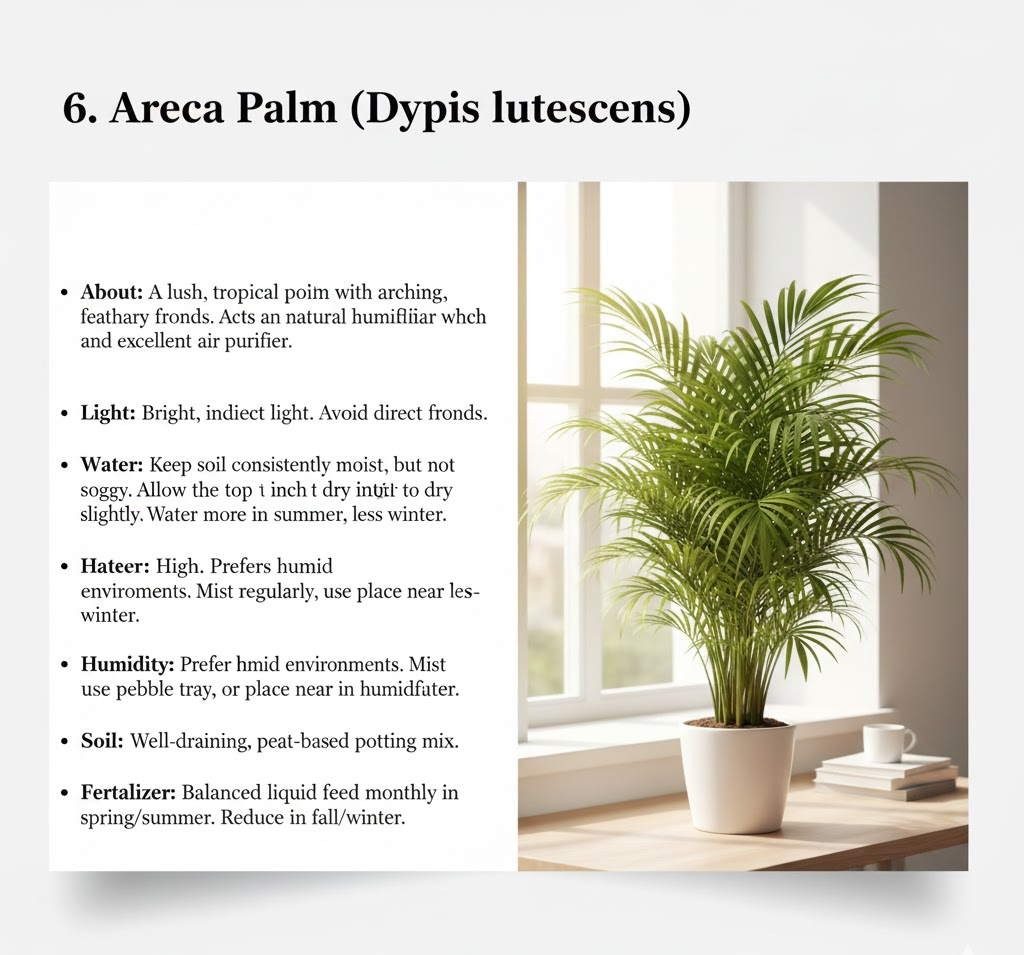
About: A lush, tropical palm with arching, feathery fronds. Acts as a natural humidifier and excellent air purifier.
- Light:Bright, indirect light. Avoid direct sun, which can scorch the fronds.
- Water:Keep soil consistently moist, but not soggy. Allow the top 1 inch to dry slightly between waterings. Water more in summer, less in winter.
- Humidity: Prefers humid environments. Mist regularly, use a pebble tray, or place near a humidifier, especially in dry climates.
- Soil:Well-draining, peat-based potting mix.
- Fertilizer:Balanced liquid feed monthly in spring/summer. Reduce in fall/winter.
7. Spider Plant (Chlorophytum comosum)

About: One of the most adaptable and popular houseplants, the Spider Plant is known for its arching, grass-like leaves and its ability to produce “spiderettes”—baby plants that dangle from long stems like spiders on a web. It’s a top-tier air purifier, famously efficient at removing carbon monoxide and xylene from indoor environments.
- Light:Prefers bright, indirect light. Avoid harsh, direct afternoon sun as it can scorch the delicate leaves.
- Water:Keep the soil slightly moist but not soggy. Water your spider plant when the top 50% of the soil feels dry. They are somewhat drought-tolerant, but the tips of the leaves may turn brown if they stay dry for too long.
- Humidity:Thrives in average to high humidity. If your office or home is particularly dry (common in air-conditioned spaces), occasional misting or a pebble tray will keep the foliage looking lush and prevent crispy brown tips.
- Soil:Use a standard, well-draining potting mix. These plants have thick, tuberous roots that store water, so good drainage is essential to prevent root rot.
- Fertilizer:Feed with a balanced, water-soluble fertilizer once a month during the spring and summer growing season. No fertilizer is needed during the winter months.