
When it comes to choosing planters, many people think “plastic is plastic.” But just like there’s a world of difference between a plastic grocery bag and a durable storage container, there’s a significant leap in quality, durability, and aesthetics between traditional injection-molded plastic planters and their rotomolded counterparts.
If you’ve ever wondered why some plastic pots feel flimsy and fade quickly while others stand strong for years, you’re about to discover the secret: the manufacturing process.
The Problem with Traditional Plastic Planters
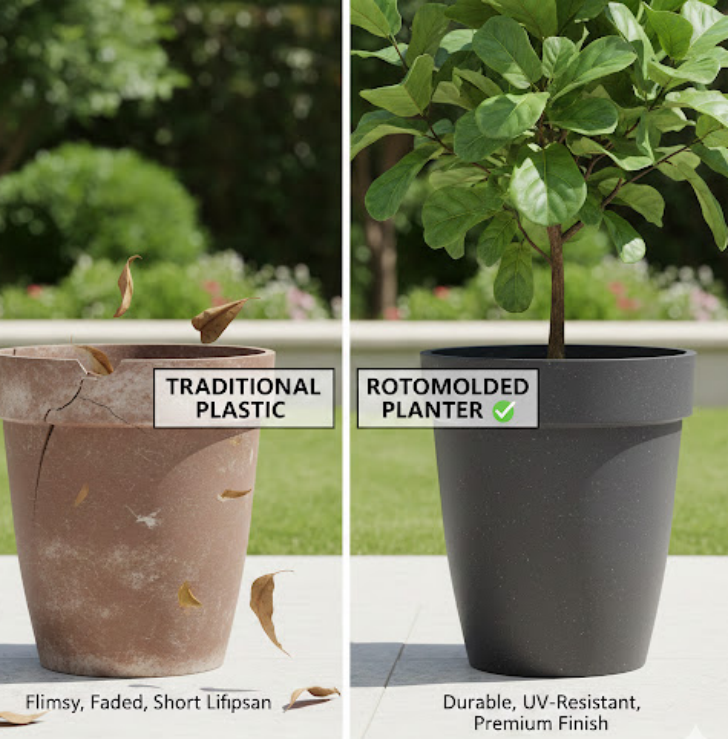
Most standard plastic planters you find at big box stores are made through injection molding. In this process, molten plastic is injected into a mold, rapidly cooled, and then ejected. This method is fast and cheap, which is why these pots are so common and inexpensive.
However, this speed comes at a cost:
- Thin, Inconsistent Walls:The plastic often cools unevenly, leading to thin spots and stress points. This is why they crack so easily, especially when exposed to temperature changes.
- Brittle Over Time:UV radiation from the sun degrades the plastic, making it brittle and prone to shattering.
- Color Fading:Dyes often sit on the surface, leading to rapid fading and a “weathered” look that isn’t always charming.
- Limited Design Complexity:The injection molding process limits the intricacy and size of designs that can be created efficiently.
The result? A planter that might save you a few dollars upfront but will likely need replacing within a season or two, contributing to plastic waste and frustration.
The Problem with Traditional Plastic Planters
Rotational molding, or rotomolding, is a completely different process that creates a superior product. It involves placing plastic powder into a hollow mold, then rotating the mold slowly on two axes in a high-temperature oven. The plastic melts and coats the inside walls of the mold evenly. Once cooled, the hollow, seamless product is removed.
This unique process results in planters that are:
1. Unmatched Durability & Strength
Because the plastic melts and fuses slowly and evenly, rotomolded planters have consistently thick walls with no weak points or seams. This makes them incredibly robust and resistant to impact, cracking, and chipping. They can withstand accidental drops, bumps, and even harsh treatment that would obliterate a traditional plastic pot.
2. Superior Weather Resistance
Rotomolded planters are built to endure. The high-quality resins used in the process, combined with UV inhibitors integrated throughout the material (not just on the surface), mean these planters are:
- Fade-Resistant:Their color stays vibrant for years, even under intense sun.
- Frost-Proof:They won’t crack or shatter in freezing temperatures.
- Heat-Tolerant:They maintain their structural integrity in scorching summer heat.
This makes them perfect for any outdoor setting, from sunny patios to exposed balconies.
3. Lightweight Yet Substantial
Despite their incredible strength and durability, rotomolded planters remain surprisingly lightweight compared to concrete, stone, or even some heavy ceramic options. This makes them easy to move, rearrange, and transport, whether you’re decorating a large commercial space or simply giving your patio a new look. Yet, their substantial wall thickness gives them a premium feel that belies their weight.
4. Aesthetic Versatility & Premium Finish
The rotomolding process allows for a wide range of sophisticated designs, textures, and finishes that mimic natural materials like stone, terracotta, or even metal, often with a smoother, more refined look than injection-molded options. They elevate the appearance of any plant and space, offering a clean, modern, or classic aesthetic without the upkeep.
5. Eco-Friendlier in the Long Run
While both are plastic, the extended lifespan of a rotomolded planter means fewer replacements and less waste ending up in landfills. Many rotomolded products are also made from recyclable materials or can be recycled at the end of their exceptionally long life.
The Clear Choice for Discerning Plant Parents and Professionals
Here’s a quick comparison:
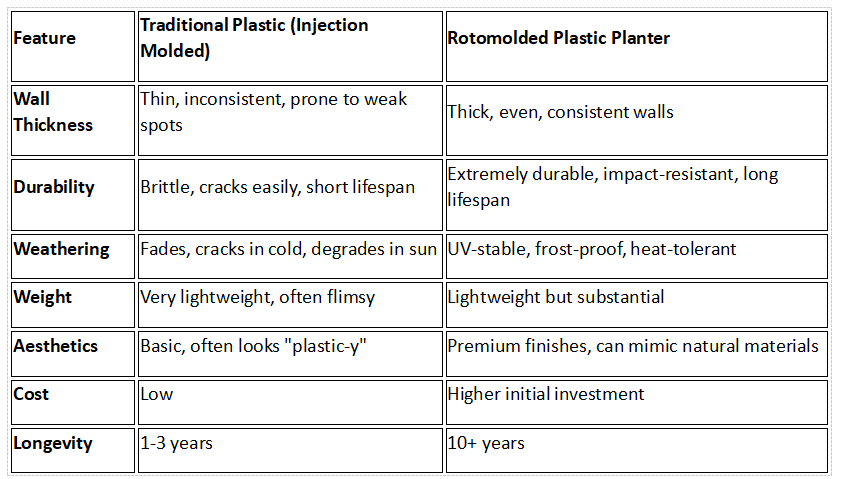
While rotomolded planters might have a higher initial price tag, their longevity, aesthetic appeal, and superior performance make them a far more economical and sustainable choice in the long run. They are an investment that pays dividends in durability, beauty, and peace of mind.
Ready to upgrade your plant game? Explore our collection of premium rotomolded planters and experience the difference yourself!